
Last month, as part of the Heritage Open Day Scheme, The Stamford Mercury Archive Trust – www.smarchive.org.uk – opened its air-conditioned rooms, where temperatures are kept at 17 degrees Celsius or below! (So, remember to take a cardy along with you!).
The Stamford Mercury is a cultural gem, important both locally and nationally. Its archive, housed near the River Welland on Cherry Holt Road, is very nearly a comprehensive record of the country’s, “oldest continuously published newspaper”. The Stamford Post was started up in 1710 and, two years later, became the Mercury. Berrow’s Worcester Journal was around before this, but hasn’t enjoyed a continuous run ever since.
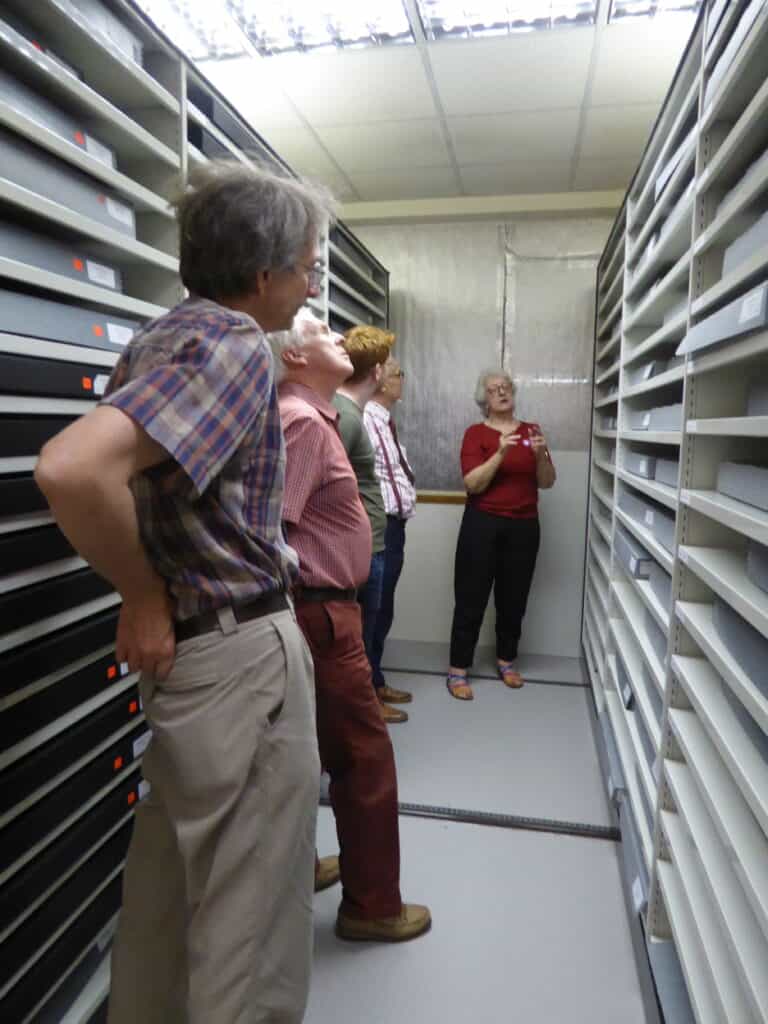
In 2005, Heritage Lottery Funding enabled a five-year conservation programme to be carried out. Now, every known copy of The Stamford Mercury is on microfilm, searchable via the British Newspaper Archive www.britishnewspaperarchive.co.uk (available to access at home, as a subscription service). Also, if you know the date you’re looking for, it may be possible to look at hard copies of the original newspaper in the archive. It’s free to use, by appointment, for personal research (charges are made for commercial use).
When examining shelves in the archive, the changing size of the newspaper over the centuries is the main thing that really stands out. At the start of the Victorian era, for instance, the Mercury was enormous by today’s standard! Newspapers had been grdually getting bigger since the introduction of the 1712 Stamp Act – this imposed a tax at a rate of one penny per sheet. Wiley newspaper owners realized they could print more news on bigger sheets of paper and pay the same amount of tax. It was finally was abolished in 1855.
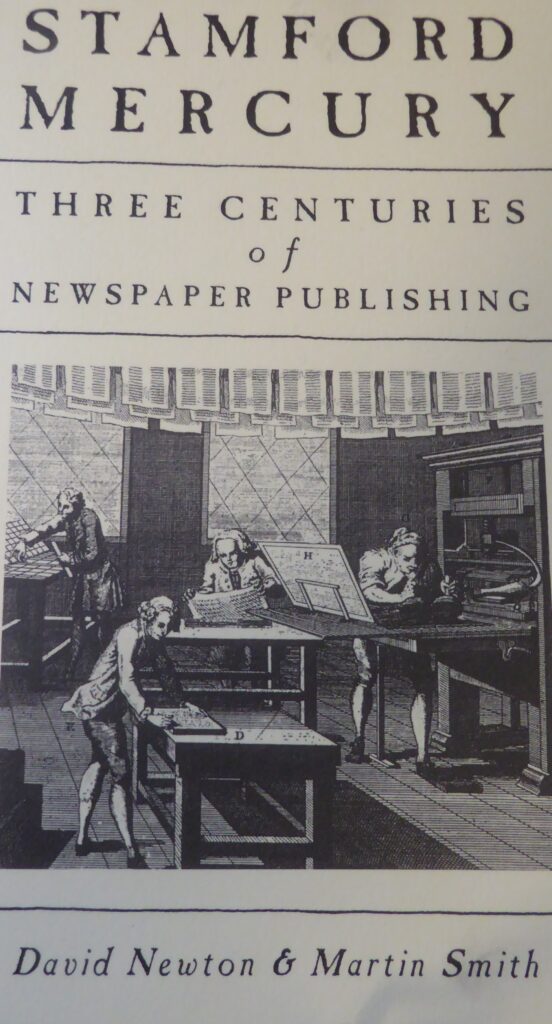
A book by David Newton and Martin Smith was published in 1999 and is a fascinating read, entitled: Stamford Mercury Three Centuries of Newspaper Publishing. It traces the history of the newspaper from its inception through to the modern tabloid we know today. Over the centuries, its pages have reported the Jacobian uprisings, American War of Independence, French Revolution and upheavals of two world wars. Bizarre local practices, such as Wife Selling, have also been covered!
Wife Selling was popular in the 1800s, apparently, when divorce wasn’t easily available to members of the working classes. In 1859, the real story of a local man who’d, “sold his wife at Pinchbeck for a half guinea and delivered her up to the purchaser in a halter, confessed he, loved her dearly, and shed abundance of tears parting with her,” inspire a storyline in Thomas Hardy’s novel, The Mayor of Casterbridge. Other Mercury reports contained tales of colourful historical figures, from Dick Turpin (highwayman) and John Clare (local poet) to the newspaper’s owners themselves, who weren’t above fighting duels on occasion, but you’ll have to read the book for the gory details.
In 1785, Richard Newcomb bought the prestigious newspaper and, the Newcomb family retained a controlling interest for 150 years. Zita Florence Todd-Newcomb was the last Newcomb family owner. She was supposedly “in charge” from 1901 to 1929, but led an extravagant and glamorous lifestyle and was only interested in the profits from it. Eventually, her lavish lifestyle absorbed almost all of the Mercury’s assets. It was sold to Sir Arthur Wheeler, Owner of the Leicester Mail, in 1929 for £16,525. He took an active interest and immediately increased the emphasis on photography.
Today the newspaper and its Archive are entirely separate entities, but based in the same building. Every year, the Archive receives a new batch of editions to conserve and there’s enough shelf space left to fit in another fifty years’ worth of newspapers. Local volunteers carry out the day-to-day work of The Stamford Mercury Archive Trust such as, compiling an inventory, answering enquires & undertaking simple conservation. New volunteers are always welcome, for more details, please e-mail enquries@smarchive.org.uk


