
‘…The rustle of birds’ wings startled from their nests or flying unseen into the bushes;
The trample of robins and woodlarks on the brown leaves, and the patter of squirrels on the green moss;
The fall of an acorn on the ground, the pattering of nuts on the hazel branches as they fall from ripeness;
The flirt of the groundlark’s wing from the stubbles – how sweet such pictures on dewy mornings…’
John Clare’s poem, Pleasant Sounds, focuses on the images created by what we hear in nature, and calls to mind such walks as the Amblers have experienced recently, when the stillness of summer has been replaced with the unpredictability of Autumn.

It is almost as though the change in season brings a difference in air quality which makes sound a bigger part of the outdoor experience. Or maybe it is that Nature’s display is a bit less colourful and our other senses are more attuned to our surroundings…
That’s the thing about walking; it is not just a feast for the eyes, but for the other senses as well. The sound of our feet as we squelch through mud, or crunch through fallen leaves. The taste of autumn as we wander through a woodland with its decaying leaves and fascinating fungi. The feel of a teasel’s prickles or a knobbly conker case. Stroking the silky smooth heads of grasses, or a delicate dandelion clock. The dampness of dew on a smooth shiny berry. All add to the ambience of an amble in the great outdoors.
John Clare liked the peace and quiet, and silence has its place, soothing us as we stroll, and allowing us freedom from thoughts which threaten to ruin the mood of solitude. However, surprises occur in the wild; pulses quicken and heads turn when startling noises are heard. Skeins of geese flying overhead can make a real racket. A startled grey heron may make a kraank sound as it lifts from the ground. Muntjac deer barking, or rutting stags ‘belching’ deep in the woods can give us a fright, so unused are we to such harsh interruptions. And, eager though we are to investigate, we usually decide it is in our best interests to give them a wide berth. Much more delightful is the sudden laughing sound made by the little grebes on the lake; the quack, quack of mallards; or the cackle of green woodpeckers. Often, there is no visual confirmation that the animals are there but their calls to their mates or offspring, or warning cries to their communities give away their presence. We are certainly never as isolated as we think.
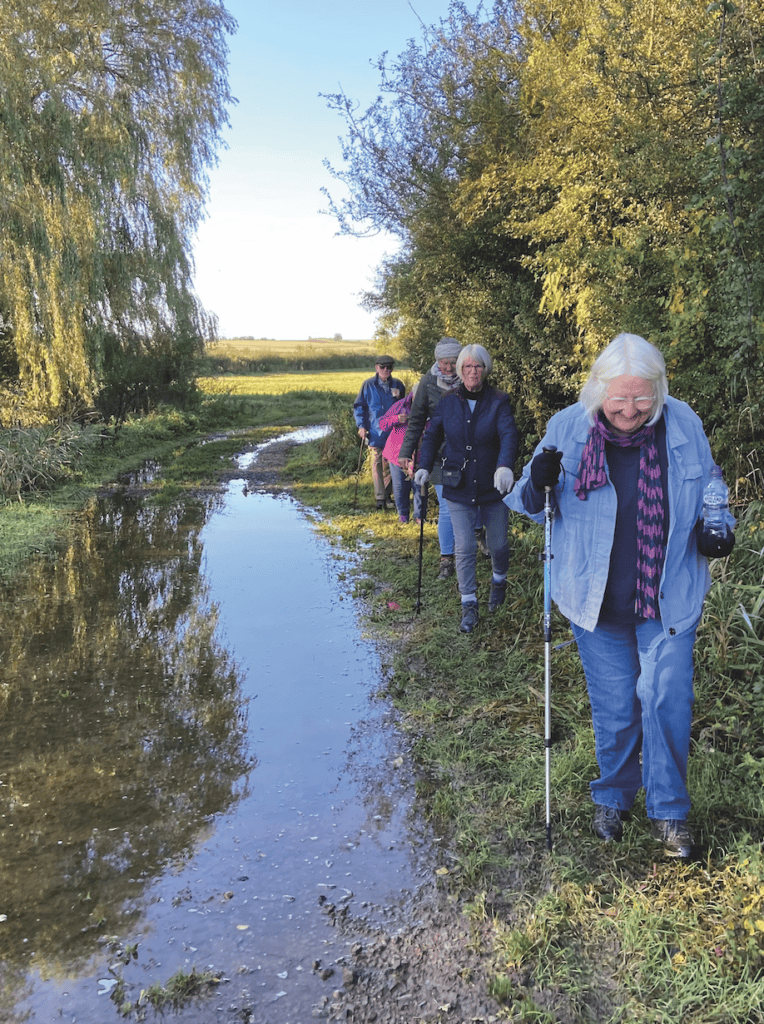
The squelching of mud has been an almost constant soundtrack to our walks this season. The amount of rainfall has meant that the day or two between the last downpour and our scheduled strolls has not been long enough to dry out the ground, and it has made life challenging. We explored a new route between Nassington and Yarwell which allowed us to stop for refreshments at Yarwell Mill, but our visit was hampered to some extent by its being extremely wet in places, and there was no avoiding submersion at times. It pays to have sturdy, waterproof footwear in those situations! The weather was lovely, though, and warmer than in recent days so we were able to appreciate the joys of having no better place to be. The wind soughed in the plane trees; a n elegant great egret, with its brilliant white plumage, attracted our attention as it searched the fast-flowing water for tasty treats and then soared silently into the bright blue sky; and a black cormorant perched on a moored narrowboat as it waited patiently for lunch to swim by. It was one of those days when it felt good to be alive – despite the glorious mud – although trying to make conversation against the backdrop of the gushing water over the weir and lock was interesting to say the least. Pleasant sounds, nonetheless.


